
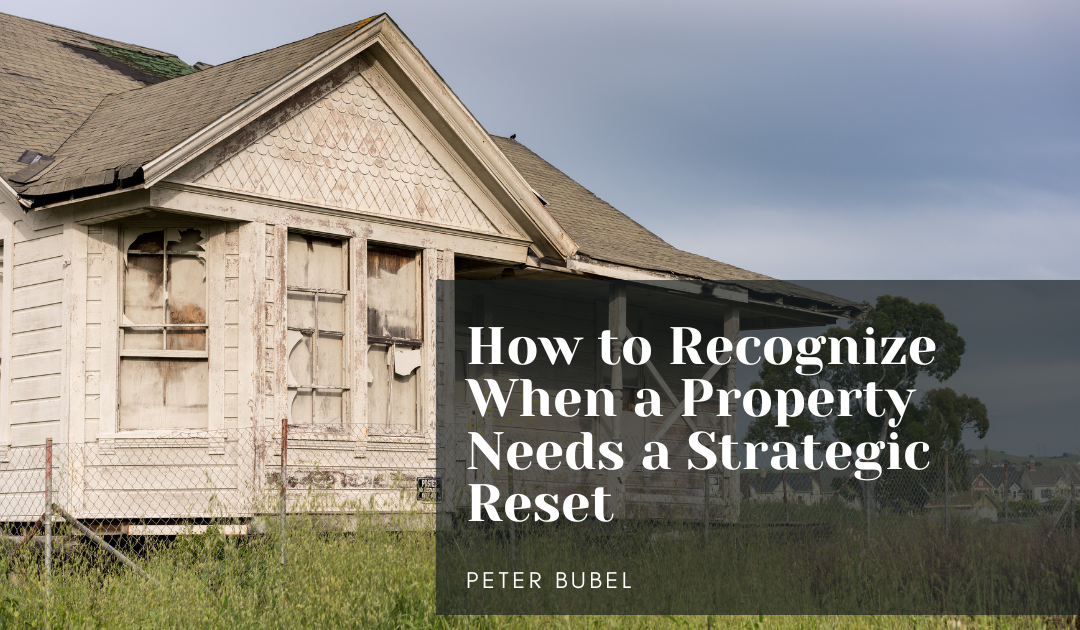
Every property investment goes through different stages. A property that performs well today may gradually become less profitable as tenant expectations, local markets, operating costs, and neighborhood conditions change. When performance begins to decline, continuing with the same approach may not solve the problem. Instead, the property may need a strategic reset.
A strategic reset does not always mean selling the property or making a major renovation. It means stepping back, identifying what is no longer working, and developing a better approach.
Declining Rental Income Is an Early Warning Sign
One of the clearest indicators that a property needs attention is declining rental income. If rental income has remained stagnant while expenses continue to increase, the property’s financial performance may be weakening.
Owners should compare current rental income with previous years and similar properties in the area. If comparable properties are achieving higher rents or attracting tenants more quickly, it may be time to reconsider the property’s pricing, amenities, condition, or marketing strategy.
Increasing Vacancy Periods
Occasional vacancies are normal, but repeated or increasingly long vacancies deserve closer attention. A property that once attracted tenants quickly but now sits empty for extended periods may no longer be aligned with current market demand.
The problem could be related to pricing, property presentation, location-specific changes, outdated features, or ineffective marketing. Understanding the reason behind the vacancy is more valuable than simply reducing the rent without investigation.
Rising Maintenance and Operating Costs
A property can appear successful from a rental-income perspective while becoming less profitable because of rising expenses. Frequent repairs, aging equipment, inefficient systems, and increasing maintenance requirements can gradually reduce returns.
When maintenance costs become consistently high, owners should evaluate whether repairing individual problems is still the best strategy. In some cases, replacing outdated systems or making targeted upgrades may reduce long-term expenses and improve the property’s appeal.
Tenant Expectations Have Changed
Rental markets evolve. Features that once made a property attractive may no longer be enough to compete. Tenants may increasingly expect better technology, improved energy efficiency, convenient amenities, updated interiors, or more flexible living arrangements.
This does not mean every property needs to become a luxury rental. Instead, owners should identify which improvements matter most to their target tenants and focus investment where it can create meaningful value.
The Neighborhood Is Changing
Changes outside the property can also signal the need for a strategic reset. New transportation routes, businesses, schools, developments, or changes in employment patterns can influence rental demand and property values.
A neighborhood that is improving may create opportunities to reposition a property and capture new demand. Conversely, declining local activity may require a different pricing, tenant, or investment strategy.
The Property No Longer Matches Its Target Market
Sometimes the property itself is not the problem—the positioning is. A home marketed toward families may perform poorly if its layout and amenities are better suited to young professionals. Similarly, a property designed for long-term tenants may have potential as a furnished or flexible rental, depending on local demand and regulations.
Clearly defining the ideal tenant can help owners make smarter decisions about pricing, improvements, advertising, and management.
Knowing When to Rethink the Strategy
A strategic reset begins with an honest assessment. Owners should review rental income, expenses, vacancy rates, tenant feedback, market competition, property condition, and future demand.
The right response could involve renovations, repositioning, improved management, new marketing, adjusted pricing, or even selling the property. The important point is to make the decision based on evidence rather than emotion.
A property does not have to be failing before it deserves a strategic review. Sometimes the best time to reset is when warning signs first appear. By regularly evaluating performance and responding to changes in the market, property owners can protect their investment, improve profitability, and keep the property positioned for long-term success.